

“Changing Your Lens,” is a powerful tool and approach that can transform the way we tackle problems. This concept revolves around the idea of altering our perspective to address challenges more effectively. In this article, we’ll unpack how it can benefit leaders and managers in navigating complex situations.
“To change ourselves effectively, we first had to change our perceptions.”
Stephen R. Covey
How Does Changing Your Lens Develop You As A Leader?
Changing one’s lens in leadership involves adopting new perspectives and paradigms, and building on innovation, empathy, and adaptability.
This transformative approach opens avenues for growth and collaboration. It enriches decision-making by considering diverse viewpoints and encourages a more inclusive and dynamic organisational culture. Leaders can leverage this shift to better navigate challenges, inspire teams, and drive positive change.
The key benefits include:
- Broadened Perspectives
- Enhanced Innovation
- Improved Adaptability
- Empathy, Compassion and Connection
- Inclusive Decision-Making
- Enhanced Problem Solving
- Personal and Professional Growth

Broadened Perspectives: Shifting perspectives allows leaders to interrupt their current thinking, break any beliefs they have of a particular situation and can see beyond traditional boundaries. By embracing diverse viewpoints and considering various angles, leaders gain a more comprehensive understanding of situations. This broadened perspective enhances decision-making, strategy development, and problem-solving.
Enhanced Innovation: A changed lens creates an environment conducive to innovation. Leaders who actively encourage thinking outside the box and value diverse ideas create a culture that thrives on creativity. This not only leads to innovative solutions but also cultivates a dynamic and forward-thinking organisational culture.
Improved Adaptability: Leadership demands adaptability, and changing one’s lens is a powerful tool in building this trait. Adaptable leaders can navigate uncertainty, respond to change effectively and guide their teams through transitions. This flexibility allows leaders and their teams to remain relevant and resilient in a rapidly evolving business landscape.
Empathy, Compassion and Connection: A shifted perspective encourages leaders to empathise with their team members and situation. Understanding different viewpoints and acknowledging individual experiences builds stronger connections. Using a compassionate approach (empathy plus action) builds a positive work environment, enhances team morale, and promotes a culture of collaboration.
Inclusive Decision-Making: Leaders who change their lens prioritise inclusivity in decision-making. They recognise the value of diverse voices and experiences, ensuring that decisions are representative and considerate of all stakeholders. This inclusivity not only leads to better decisions but also promotes a sense of belonging within the team.
Enhanced Problem-Solving: Problems become opportunities for growth when leaders change their lens. They approach challenges with a fresh mindset, seeing possibilities where others see obstacles. This mindset shift fuels effective problem-solving, encouraging resilience and perseverance in the face of adversity.
Personal and Professional Growth: Changing one’s lens is a catalyst for personal and professional growth. It challenges leaders to continuously learn, adapt, and evolve. This commitment to growth not only benefits the individual leader but also sets a positive example for the entire organisation.
How To Change Your Lens
To implement Changing Your Lens successfully, you need to understand and practice the following process and steps:
- Critical Thinking
- Start with a Problem Statement
- Shift Your Contextual Lenses
- Change Your Reality
Critical Thinking
Critical thinking is at the core of this approach. Pausing and examining challenges with different eyes allows individuals to break free from old solutions and address the real structure of a problem.
Start with a Problem Statement
The first condition of solving a problem is understanding the problem, which can be done by developing a clear and agreed upon problem statement. Whether individually or within a group, the goal is to shift your perspective on what the specific problem might be and how you perceive the problem. This process involves asking the right questions and exploring various angles. A problem statement is a description of an issue to be addressed or a condition to be improved upon. It identifies the gap between the current problem and goal.
In mural.co’s article on what makes a good problem statement they show how a good problem statement can help you and your team in your work by describing and clarifying the issues at hand.
The most effective approach to developing a problem statement focuses on the root cause of the issue by objectively describing it as comprehensively as possible using these 5 why’s.
- Who is having the problem? This could refer to individuals, groups, or entire organisations. It is anyone (or anything) that is affected by the problem.
- What is the problem? This can be thought of as the gap that has formed between the current state and the desired state. Try to sketch out the boundaries of this gap and describe the unmet need that exists.
- Where does this problem occur? This could be a geographic location (such as a city or company), a physical object (such as a product), an entity (such as a marketing department), or even a process (such as commuting).
- When does this problem occur? Is there a certain time frame in which the issue occurs? Is there a deadline by which it needs to be solved?
- Why is the problem worth solving? This should focus on the importance of fixing the problem. What kind of impact will it make? How will solving it affect customers, employees, and other stakeholders? In short, what makes a solution worthwhile?
Good problem statements don’t need to be complicated. They should be simple and direct. In one sentence, they describe exactly what the problem is, leaving little to no ambiguity about what should happen next or where the focus should be on developing strategies and solutions.
Problem Statement Example 1:
“XYZ Corporation’s reliance on referrals and word-of-mouth has led to insufficient inbound leads, hindering business growth.”
Problem Statement Example 2:
“An employee turnover of 35% in company X is negatively impacting productivity, morale, and profitability.”
Shifting Contextual Lens
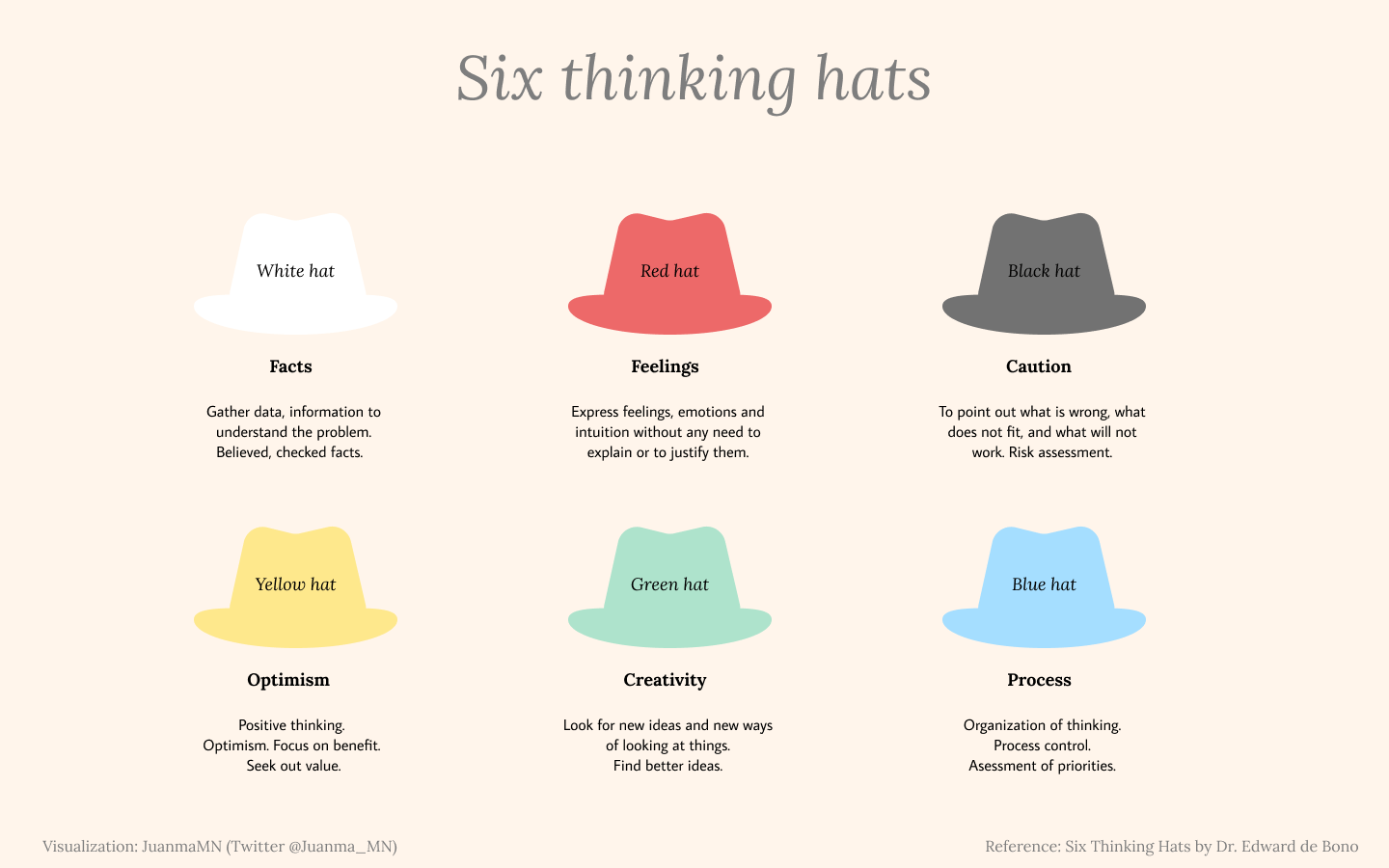
Utilising techniques like de Bono’s six thinking hats can be instrumental. These hats represent different thinking styles, such as analytical and creative. By wearing these metaphorical hats, individuals can shift their contextual lens, gaining a fresh point of view.
Find out more about de Bono’s Six Thinking Hats here.
Changing Your Reality
Another approach Leaders and manager might choose to actively work to overcome biases and preconceptions is to;
- Change their point of view
- Change their context, or
- Change their reality
This might involve embodying the perspective of someone else, such as a CEO, to gain insights beyond their own vantage point.

Example:
Stepping into someone else’s shoes is the goal of this process. So how do you do this? Let’s take your company CEO as an example and start to think like the CEO, what are some of the questions you might be asking yourself as CEO and how would you view the answer from their perspective?
You want to go deeper and try to embody yourself in that person’s perspective. Ask yourself, “If I was acting like my CEO right now”…
- How would they sit?
- How would they talk?
- What’s the language that they would use?
- What have I heard them ask before?
Another option is you go and interview your CEO and think about what some of the questions you would have about this problem.
Overcoming Key Challenges When Changing Your Lens
While Changing Your Lens offers valuable benefits, leaders need to be aware of the following key challenges that need to be addressed.
Inherent Biases
Inherent biases can influence the choice of perspectives, undermining the effectiveness of this approach. Leaders must be aware of their biases and actively work to overcome them. Strategies like having someone else write down answers or adopting the mindset of a CEO can be effective.
Complexity and Confusion
Introducing multiple perspectives may complicate issues, especially if conflicting viewpoints emerge. Managing this complexity requires clear communication and a team equipped to handle diverse perspectives. You may also try and timebox your approach to minimise introducing too many conflicting perspectives.
Neglecting Expertise
While seeking different angles do not undervalue expert opinions. Not all perspectives are equally valid, and a balance must be struck to avoid suboptimal outcomes.
Resource
The Imperfectionists – Strategic Mindsets for Uncertain Times

The book, The Imperfectionists by Robert McLean and Charles Conn suggests 6 different mindsets for problem-solving under uncertainty. One of the mindsets is having a dragonfly-eye view of the world. Which means to see through multiple lenses. Dragonflies have huge compound eyes, with hundreds of lenses that are sensitive to different wavelengths of light.
Great problem solvers zoom in and then zoom out, or widen their aperture to make sure they are seeing the real structure in front of them and not imposing an old solution or addressing its surface.
Take John Foley’s success with Peloton as an example. While traditional home gym companies focused on replicating outdoor exercise indoors, Foley reimagined it as a social experience, leading to a groundbreaking business.
To learn more about John Foley’s story here with Tim Robbins.
To find out more about the book The Imperfectionist: Strategic Mindset for Uncertain Times, Click here.

Case Studies
Case Study 1: Addressing High Employee Turnover
Original Situation: A consulting firm is experiencing high employee turnover. Initial investigations suggest issues related to work culture and employee engagement.
Change Your Lens Approach:
- Work Culture Lens: Shifting the focus to the company’s work culture, the firm might uncover issues like lack of work-life balance, limited career advancement opportunities, or a non-collaborative work environment.
- Employee Feedback Lens: Looking through the lens of direct employee feedback, the firm conducts thorough exit interviews and anonymous surveys. They discover that employees feel underappreciated and lack meaningful engagement with their projects.
Recruiter’s Perspective Lens: Adding the lens of a headhunter or recruiter can provide a unique external viewpoint. A recruiter typically interacts with a wide range of candidates and has insights into why individuals leave their current roles and what they are seeking in new opportunities. From this lens, the company might discover:
- Market Positioning: How the firm is perceived in the market as an employer. A recruiter can offer insights into the firm’s reputation compared to competitors.
- Attractiveness to Potential Hires: Understanding what makes the firm attractive or unattractive to potential hires. This could include factors like the firm’s mission, growth opportunities, company culture, and compensation.
- Industry Trends: Knowledge about broader industry trends in employment, such as shifts in desired benefits, emerging roles, or changes in what top talent values in their careers.
Outcome:
Incorporating the recruiter’s perspective, the firm realises that their employer branding needs improvement and that they are not effectively communicating their unique value proposition to potential employees. They decide to revamp their employer branding strategy, focusing on showcasing their unique culture, commitment to employee growth, and the meaningful impact of their work. This not only helps in retaining current employees but also makes the firm more attractive to top talent in the industry.
Case Study 2: Addressing Internal Issues in a Bank
Situation: A bank is experiencing internal issues related to customer dissatisfaction and declining sales of financial products.
Change Your Lens Approach:
- CEO’s Perspective (Strategic and Holistic Lens):
- The CEO’s viewpoint is typically strategic and holistic. From this lens, the focus would be on the bank’s overall performance, market positioning, and long-term sustainability.
- Concerns would include how internal issues are affecting the bank’s reputation, customer loyalty, and financial health.
- Solutions might involve comprehensive strategies like rebranding, redefining customer service protocols, or investing in new technology to enhance customer experience.
- Cashier’s Perspective (Frontline Operational Lens):
- A cashier on the front desk deals directly with customers. This perspective offers a ground-level view of the daily operations and customer interactions.
- Issues observed might include specific customer complaints, inefficiencies in routine processes, or gaps in communication between the front desk and other departments.
- Ideas for improvement could focus on enhancing customer interaction training, streamlining processes for better service delivery, or providing better tools to handle customer queries efficiently.
- IT Team’s Perspective (Technological and Process Lens):
- The IT team’s lens focuses on the technological infrastructure and processes within the bank.
- They might identify issues like outdated systems that slow down customer service, lack of integration between different banking platforms, or data security concerns affecting customer trust.
- Solutions could involve upgrading technology systems, implementing more user-friendly interfaces for both employees and customers, and enhancing data security measures.
Outcome:
By examining the internal issue through these diverse lenses, the marketing team in the bank gains a multi-dimensional understanding of the problem. They can then develop a comprehensive strategy that addresses not just superficial marketing issues but also deeper organisational challenges. For instance, marketing campaigns could be designed to highlight improvements in customer service and technology, directly addressing concerns raised from the frontline and IT perspectives. Simultaneously, strategic insights from the CEO’s perspective can guide long-term branding and customer engagement strategies.
Change Your Lens To Overcome Bias
Changing Your Lens is a transformative approach that empowers individuals and teams to tackle problems from diverse perspectives. By overcoming biases, asking the right questions, and leveraging different viewpoints, one can achieve more effective problem-solving and drive positive outcomes. Embracing the dragonfly view allows for a holistic understanding, ensuring solutions address both surface-level issues and deeper organisational challenges.