The difference between coaching and mentoring can be difficult to define. Some people argue that they are virtually the same thing, but the truth is – there are some important differences. In this article, I clearly demonstrate how coaching and mentoring are different – and how to identify when is the right time to use each approach.
Influence From A Leadership Perspective
Here’s how I like to think of influence from a leadership perspective. It’s made of up three elements – Directing, Mentoring, and Asking.
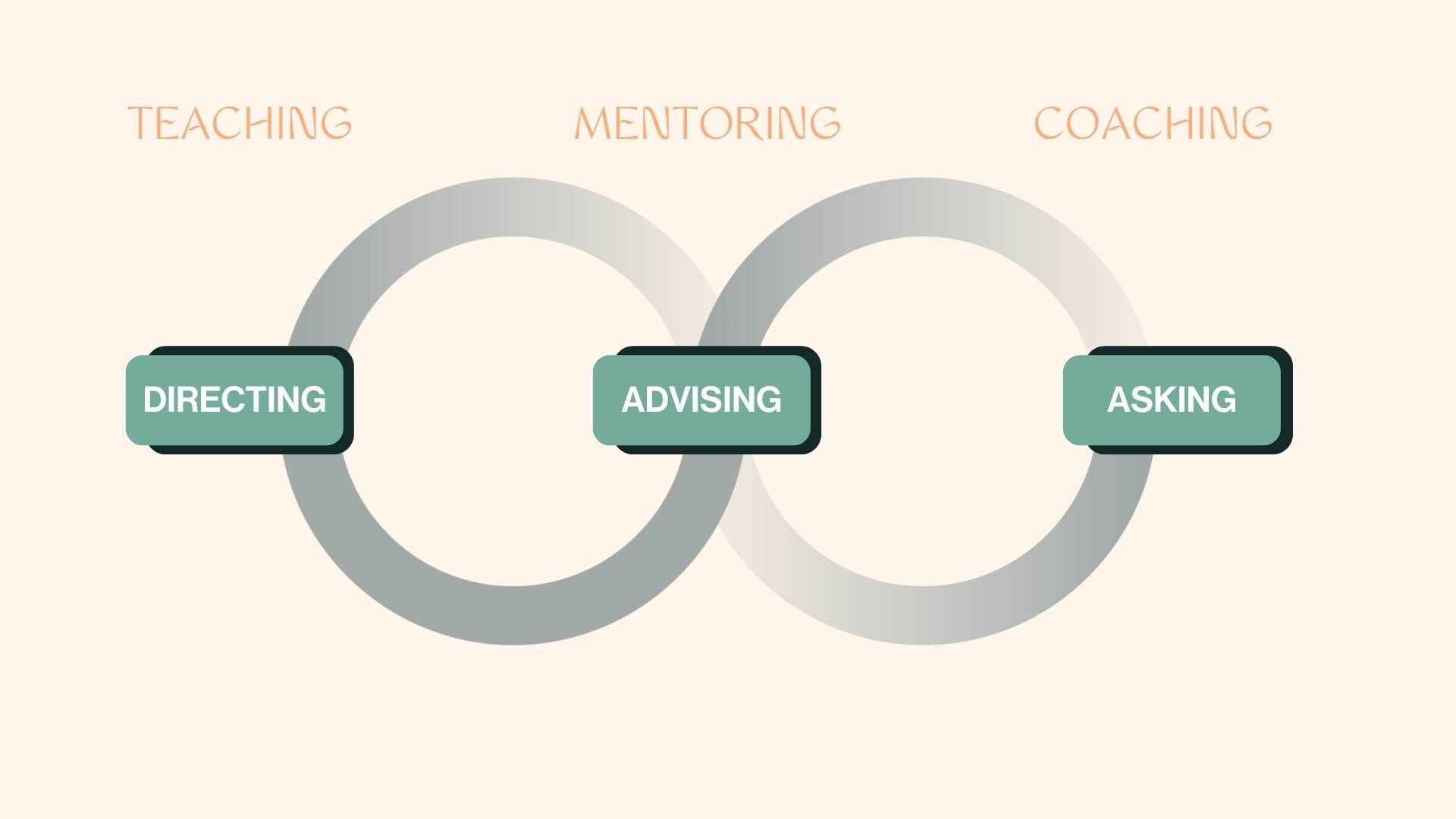
Directing (aka teaching and telling)
When you are directing, you’re in teaching mode. At that moment in time, you’re telling your coachee about some specific content or information.
Mentoring (aka advising)
In the middle, you’ve got mentoring. Mentoring is all about advising. For many people, this is an “aha!” moment when they realise that what they thought was coaching is actually mentoring.
Mentoring is about being a guide, often offering wisdom or advice when it’s needed. Typically, a mentor is an expert in their field and is transferring knowledge or skills to another less experienced individual.
So you might act as a mentor when a member of your team needs to know how to do something based on your experience. It might sound something like:
- “The way in which I have approached it previously is X, Y, Zed.”
- “You might find you encounter these problems.”
- “Based on the last project, let’s make sure we’ve got a, b and c in place.”
It can be informal and less structured. And it’s more targeted in its approach.
Asking (aka coaching)
Whereas coaching is actually all about asking. It’s predominantly about asking good questions and using deep, active listening to understand the coachee’s context, perspective and experiences. And it’s about helping to move the coachee towards a solution.
Coaching is focused on the future. We use the present and the past to understand the coachee’s context, experiences and results to date.
But the ownership and the development remains with the coachee – the person you’re coaching.
The difference between mentoring and coaching
With mentorship, you’re directing the coachee from your experience. Whereas with pure coaching, you’re actually giving the responsibility to the individual to go deep to find their own answers and their own way forward.
Mentoring is more about directing and showing, whereas coaching is about asking.
So the key distinction between the two is about the questions you ask and the space you give the coachee to respond to those questions.
A coach tells less and asks more.
What I find when I am coaching is that I may move between the two – mentoring and coaching – based on their experience in a particular field and what they’re looking to achieve.
I start off with a coaching mindset and approach, asking questions to get them to go a little deeper and open up the problem space. But in some situations, it may come to a point where they get a bit stuck and they need some tactical approaches.
That’s where I might decide to move back to mentoring, which sounds like:
- “Well, I’ve used this template before, would you like to use it?”
- “Have you considered X, Y and Z?”
But I try to spend most of my time asking questions. And here’s why.
Have you ever said or thought something like this?
“I feel I’ve been over this with him/her/them in the past and each time she/he/they agree. Yet each time – nothing significant changes”
I hear this a lot from leaders. And what we actually find when we look at it from a neurological perspective, is that directing and telling is less effective, because:
1) The message doesn’t have enough relevance and meaning
They are hearing you but the message doesn’t have enough relevance and meaning for them.
But there is an actual chemical reason why they might not be assimilating that message in the way you think they should. Here’s the thing. Our brain needs dopamine – and the right amount of dopamine. And dopamine levels increase when we see, feel, or hear relevance in the message being served to us.
When something is meaningful to us, It actually creates more connections in the brain. We just light up (neurologically) a lot more.
So if you don’t provide ownership over the message they’re receiving by asking great questions, they just don’t hear it in the same way.
2) There’s nothing new (you’ve said it before).
You’ve said it before in the same way. People need novelty and variety to create some sort of pattern interrupt.
So if you tell them in the same way over and over and they’re not responding, it’s probably because there isn’t variety in it. You need to find a way that’s going to connect with them.
3) Their emotional brain is not engaged
When people listen to instructions, we are often using the rational part of our brain. But that doesn’t necessarily help with recall.
What we need to do is make sure we’ve got their emotional brain connected because emotion focuses attention. And that means they will have better recall.
When you think about your own learning, you can probably look back at things that really resonated with you or that you’ve had to engage with. You remember them more because of that emotional and neuro connection.
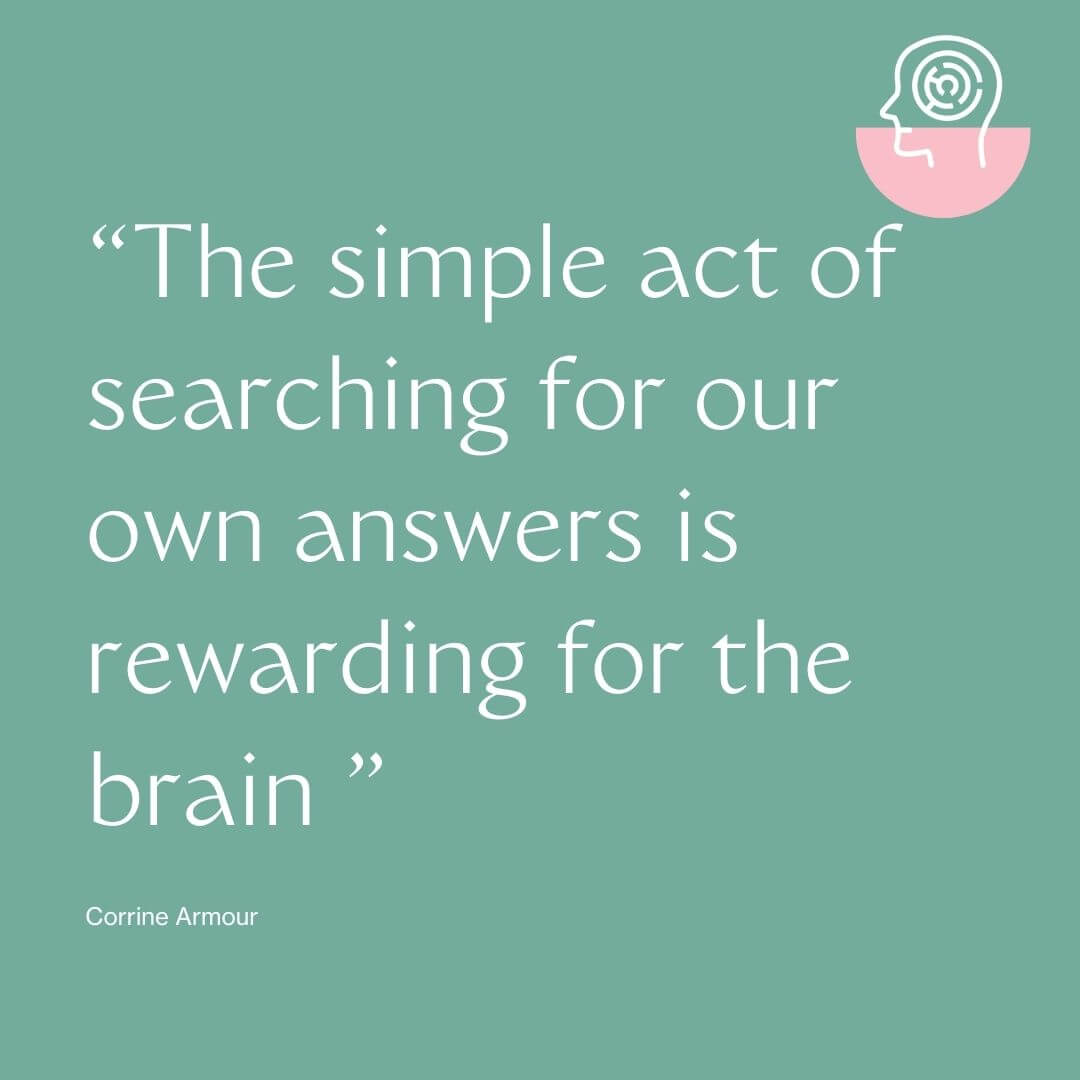
Simply put, the act of people searching for their own answer or for us searching for our own answer is actually more rewarding for the brain. And their recall is going to be better on those things they’ve had to go searching for.
Yes, it’s uncomfortable for us to sit in that gap (and the uncomfortable silence) of them searching for the answer. But, there’s a reason that our brain actually lights up when they go through that process.
Bottom line – telling is fast and easy, but it’s not effective.
Benefits Of Coaching (Asking) Instead of Mentoring (Telling)
So, how can we use what we know about the brain? That is, that people connect more when they go deep for answers than if they are simply told the answers?
It is known that a leader who asks (rather than tells) …
- Draws on coaching qualities to unlock a person’s potential to maximise their performance.
- Facilitates self-directed learning by asking questions that build awareness and generate insight.
- Proactively supports the development of their people by helping them learn rather than teaching them
(ref: Leaders Who Ask, Corinne Armour)
Remember, the context will shift. At different times, you’ll move from teaching to mentoring and mentoring to asking. Or asking and then teaching.
Help people to go deep and then deliver them a concept to help them make the connection.
Put This Into Action
Think about how you can use questions in a way that can help your team make better decisions and meetings.
Because when you get people to go deeper with their questions, it will help them create connections and make them more effective in any innovative and creative environment.
Coaching Mindset
Now that we’re clear on the difference between mentoring and coaching, let’s look at some of the beliefs, mindsets, and emotional states that may help you coach more effectively.
To get yourself into the right mindset before a coaching session, try “priming” yourself with mantras like these:
- I am able to help, whether I’m skilled in the specific area or not.
Because coaching is about asking questions and helping the coachee find answers, not giving them the answers. - My coachee has the potential to find their own solutions.
They just need a little help to get on the right path. - Our goal is to get to an outcome.
Coaching is not counselling. - I will remain open and curious.
Going in with a mindset of “how can we play with this?” actually allows you to access more neural pathways in your brain, which means you may see opportunities you might otherwise miss.
Moving From Awareness to Outcome
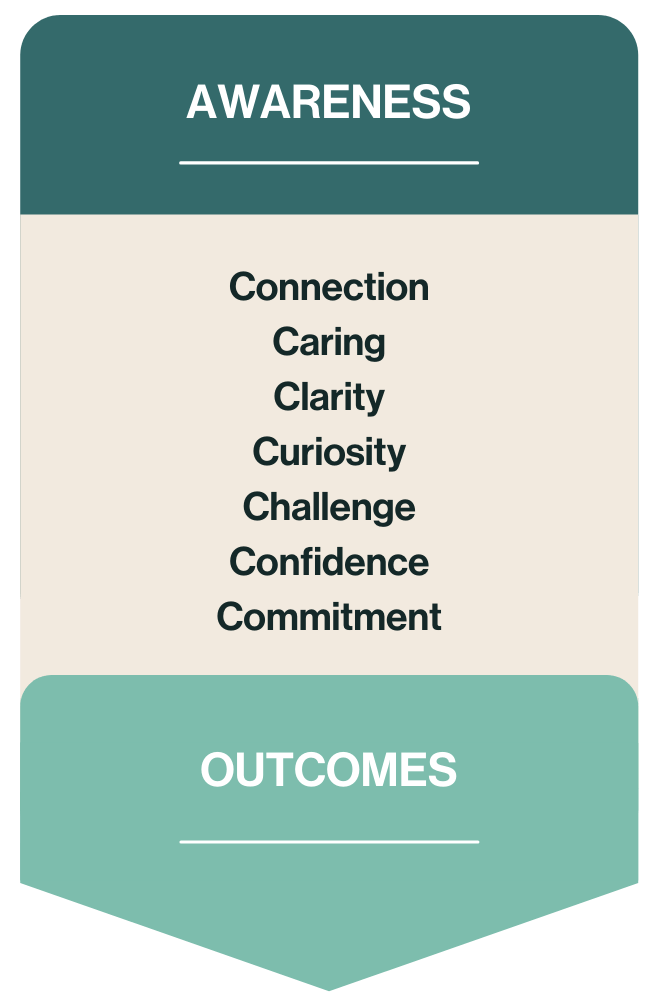 As a coach or even a mentor, your role is to help your coachee become aware of what’s potentially getting in the way or holding them back. Here are some tools you can use to get there.
Connection
Connection is a powerful tool in coaching. How can you build rapport or a connection with someone so they have trust in you?
Bring your whole self to the conversation and work to build a connection with your coachee.
Caring
Caring shows up as attention.
So, make sure you’re 100% focused on the individual. You cannot be multitasking at this point. Set your phone or smartwatch to silent and focus solely on your coachee.
If you are coaching remotely, consider the environment they are in. Do they have their partner or a flatmate behind them? Is that going to be tough for them to open up with you?
Really think about how to bring a level of care and attention into the session.
Clarity
This is where asking questions really comes into play.
Your role as a coach is to help the person find clarity. And asking great questions is how you get there.
Curiosity
Be really curious about what’s happening, what makes that person tick, and what’s holding them back.
Before you begin the session, put yourself into a mindset of deep curiosity and openness about the person and what’s going on for them.
Challenge
A great coach does not hold back on challenging someone. Because there are beliefs getting in the way of them moving forward so you have to be willing to challenge that.
One way to do it that isn’t too confrontational is to bring humour to it.
Here’s an example. Perhaps your coachee is struggling with imposter syndrome. You might say something like, “Oh, that’s really interesting. You believe everything that people you don’t respect say about you?”
Usually, they’ll respond with something like, “Well, no. Of course not.”
Helping undo someone’s belief through challenge can be done with some lightheartedness.
Confidence
This is not just confidence in your own ability, but your confidence in their ability.
When you coach someone, you need to have a level of confidence that they’ll be able to make the changes you talk about.
Commitment
By this, I mean a commitment to the wellbeing and progress of your coachee and how you’re going to help hold them to account.
Thinking about some of these areas before you begin your conversation can help you have a more productive session.
The key is to take these mindsets, beliefs, and behaviours and think about how to use them in the context of coaching.
Because the stakeholders you have and the people you lead or influence want leaders who will coach and inspire them. Gone are the days of autocratic command and control.

Of course, context plays a big part. Sometimes, as a leader, you do need to tell. But many times, coaching is the more effective approach.
Your goal should be to achieve a good mix of moving between your styles of coaching, mentoring, and directing. And being able to identify which approach is the right one for a particular situation.
The Case For More Coaching
Hopefully, you now clearly understand the difference between coaching and mentoring.
And you can now see the case for using more coaching (aka asking and listening) in your team and organisation and directing and mentoring (telling) a bit less.
A big part of what I do with my clients involves helping managers and leaders understand this difference and apply it effectively in their organisation. I’d love to help you do the same.
Learn how to inspire, engage and lead your team effectively with coaching and join my self-paced online program.