Picture this… You’ve just stepped into a leadership role, eager to implement some of your ideas that you think can create a more cohesive productive team. But as you settle into your new position, you realise that some of the skills that got you here aren’t quite enough to take you – and your team – to the next level. Sound familiar?
Or perhaps you’re in a management or leadership role but you find that you keep defaulting to being the person that takes on some of the more challenging projects, uncertain that your team have the skills or perseverance to get the job done in time for the deadline.
If you’re nodding along, you’re not alone. Many emerging leaders find themselves grappling with two critical skills that can make or break their success: building trust and mastering the art of delegation. These skills are foundational elements of effective leadership, yet they’re often overlooked in traditional management training.
In my years of coaching executives, I’ve heard a recurring theme that highlights the importance of these skills. Senior leaders consistently express frustration about their rising stars – those promising managers and directors who seem poised for greatness but struggle to ascend to the next level. The root of the problem? A reluctance or inability to delegate effectively and develop their team’s capabilities.
Here’s what I often hear:
“John is brilliant at execution, but he’s drowning in operational details. He needs to step back and think strategically, but he can’t seem to let go of the day-to-day tasks.”
Or:
“Louise has great ideas, but she’s not empowering her team. She’s become a bottleneck, and it’s hindering not just her growth, but the entire department’s progress.”
These scenarios illustrate a critical point, the lack of delegation and team development doesn’t just impact the individual leader. It creates a ripple effect, hindering the progression of emerging leaders and preventing them from focusing on the higher-value tasks that senior leadership expects of them. Instead of driving innovation, shaping strategy, and fostering cross-functional collaboration, these promising leaders find themselves stuck in tactical work that should be handled by their teams.
The consequences are significant
- Stunted growth: Both for the leader and their team members, who aren’t given opportunities to stretch and develop new skills.
- Missed opportunities: Strategic initiatives fall by the wayside as leaders are too busy with operational tasks.
- Burnout: Trying to do it all leads to stress and exhaustion, impacting both performance and job satisfaction.
- Organisational bottlenecks: Decision-making slows down, and the organisation becomes less agile.
This a 2-Part series of articles. In Part 1 we’ll explore why trust is one of the most important ingredients to developing high-performing teams and in Part 2 – how delegation is your key to scaling your impact and creating growth opportunities for your team. We’ll dive into practical strategies backed by research and real-world examples, helping you navigate the sometimes-tricky waters of leadership.
So, whether you’re a new manager or a seasoned leader looking to question and re-invent your leadership approach, I promise these approaches will help the way you lead and empower your team.
Trust: the belief that others, through their action or inaction, will contribute to our well-being and refrain from inflicting damage upon us.
Understanding Trust in Leadership
1. The Trust Factor: More Than Just a Warm Fuzzy Feeling
When we talk about trust in the workplace, we’re not just referring to a nice-to-have, feel-good emotion. Trust is the glue that holds teams together, helps them overcome set-backs and propels them towards excellence. But what does trust mean in a leadership context?
Rachel Botsman, a renowned expert on trust in the modern world, offers a compelling definition. In her book “Who Can You Trust?”, she describes trust as “a confident relationship with the unknown.” This perspective is particularly relevant in leadership, where we’re often asking our team members to venture into unfamiliar territory, take risks, and embrace change.
Botsman’s definition aligns well with Dr. Barbara Misztal’s sociological view of trust as “the belief that others, through their action or inaction, will contribute to our well-being and refrain from inflicting damage upon us.” In the workplace, this translates to team members believing that their leader has their best interests at heart and will support their growth and success.
2. Trust Leaps: The Bridge to Innovation and Growth
Botsman introduces the concept of “trust leaps,” which are particularly relevant for emerging leaders looking to delegate and empower their teams. A trust leap occurs when we take a risk to do something new or different, bridging the gap between the known and the unknown.
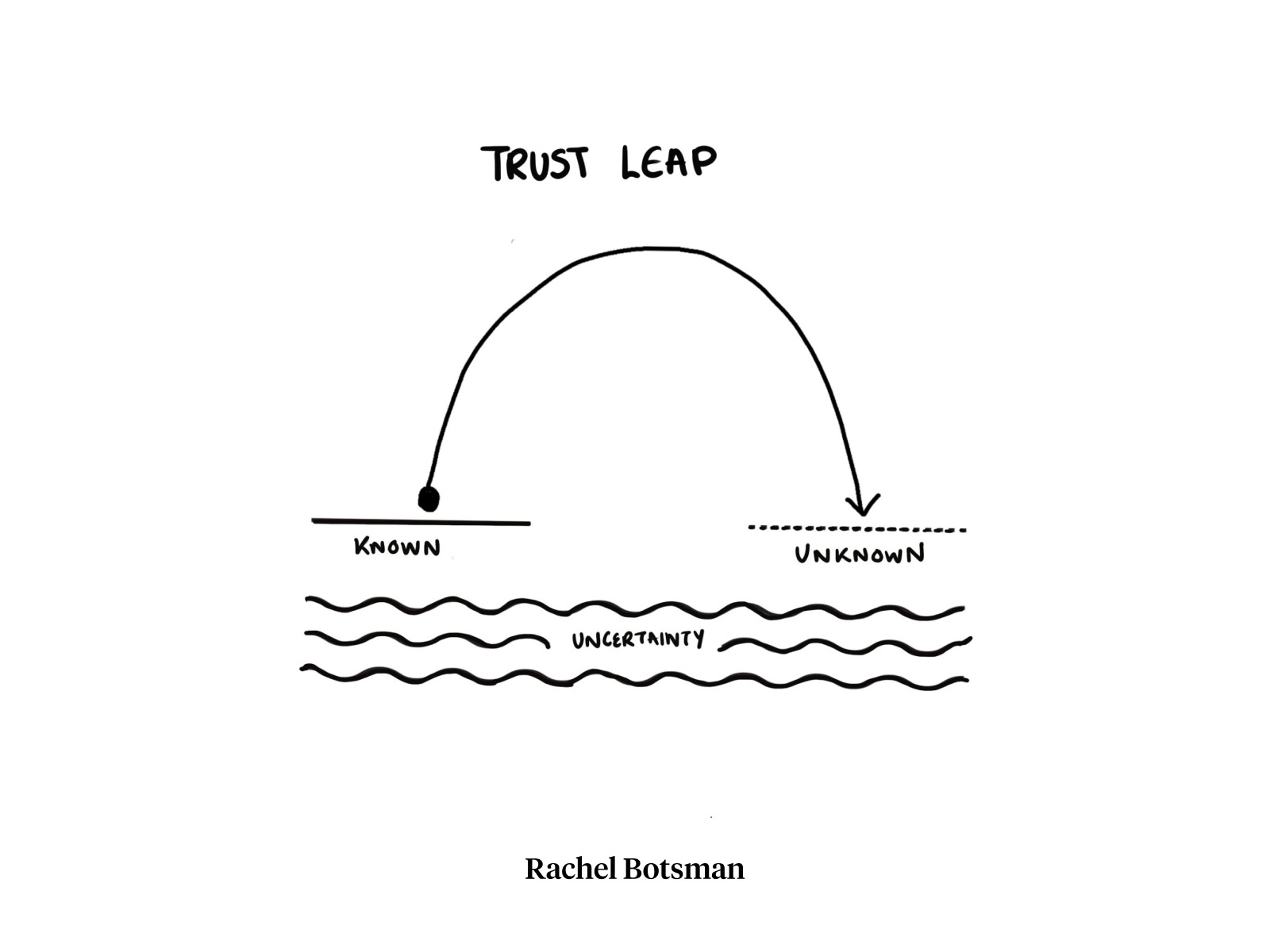
In a leadership context, trust leaps happen when:
- A leader delegates a significant task to a team member for the first time
- A team member takes on a challenge outside their comfort zone
- The team adopts a new process or technology
3. The ROI of Trust: It’s All in the Numbers
For those of you that want some evidence that focusing on building this important ingredient has an impact on the bottom line, then let’s talk numbers.
A study by Paul J. Zak, published in the Harvard Business Review, found that employees in high-trust organizations report:
- 74% less stress
- 106% more energy at work
- 50% higher productivity
- 13% fewer sick days
- 76% more engagement
- 29% more satisfaction with their lives
- – 40% less burnout
These aren’t just impressive statistics; they’re a clear indicator that trust isn’t just a ‘nice-to-have’ – it’s a critical driver of organisational success.

Breaking Down the Trust Barriers
Despite its importance, building trust isn’t always easy. Common barriers include:
- Lack of transparency: When information doesn’t flow freely, suspicion and rumours fill the void.
- Inconsistent behaviour: If your words and actions don’t align, trust erodes quickly.
- Micromanagement: Nothing says “I don’t trust you” quite like constantly looking over someone’s shoulder.
- Failure to acknowledge mistakes: Leaders who never admit fault create an environment of blame rather than learning.
Recognising these barriers is the first step in overcoming them. In the next section, we’ll explore practical strategies for building trust with your direct reports, turning these potential roadblocks into opportunities for connection and growth.
Strategies for Building Trust with Direct Reports
Now that we understand the importance of trust, let’s dive into some actionable strategies for building it within your team.
1. Navigate Transparency: Balancing Openness with Discretion
Imagine you’re the captain of a ship navigating through fog. Your crew needs to know the general direction, potential hazards, and their specific roles to keep the ship on course. However, constantly broadcasting every minor course correction or sharing unconfirmed reports of distant obstacles might create unnecessary anxiety or confusion. As a leader, your role in transparency is similar – you need to provide clear, relevant information to your team while also filtering out noise that could impede progress or morale.
In the workplace, transparency is about striking the right balance between openness and discretion. As a leader, you’ll often find yourself privy to information that can’t or shouldn’t be shared broadly. The key is finding the sweet spot that keeps your team informed and engaged without overwhelming them or breaching necessary confidentiality.
Start by being as open as you can about information that affects your team. Keep them in the loop about decisions, changes, and challenges that directly impact their work. A study by TINYpulse found that management transparency is the top factor in determining employee happiness.
However, it’s equally important to be clear about the boundaries of transparency.
Pro tip: Schedule regular team meetings where you share updates and encourage questions. Let your team know that there will be times when you can’t share everything. Explain that this isn’t about excluding them, but about respecting confidentiality or timing issues. Create an environment where team members feel safe asking about things they’ve heard or are concerned about, even if you can’t always provide full answers.
2. Walk the Talk: Consistency is Key
Imagine if your GPS gave you different directions every time you used it. You’d probably stop trusting it pretty quickly, right? The same goes for leaders. Consistency in your words and actions builds predictability, and predictability breeds’ trust.
Make promises carefully and keep them religiously. If circumstances change and you can’t follow through, communicate openly about why. Research by David DeSteno published in the Harvard Business Review shows that consistency is one of the key factors in building trust.
3. Embrace Vulnerability: Strength in Openness
You’re not perfect, and pretending to be doesn’t fool anyone. In fact, it can create distance between you and your team. Brené Brown, a research professor at the University of Houston, has found that vulnerability is not a weakness, but rather a measure of courage.
Admit when you don’t know something or when you’ve made a mistake. Share your challenges and how you’re working to overcome them. This not only makes you more relatable but also creates a safe space for your team to do the same.
4. Listen Like You Mean It: The Power of Active Listening
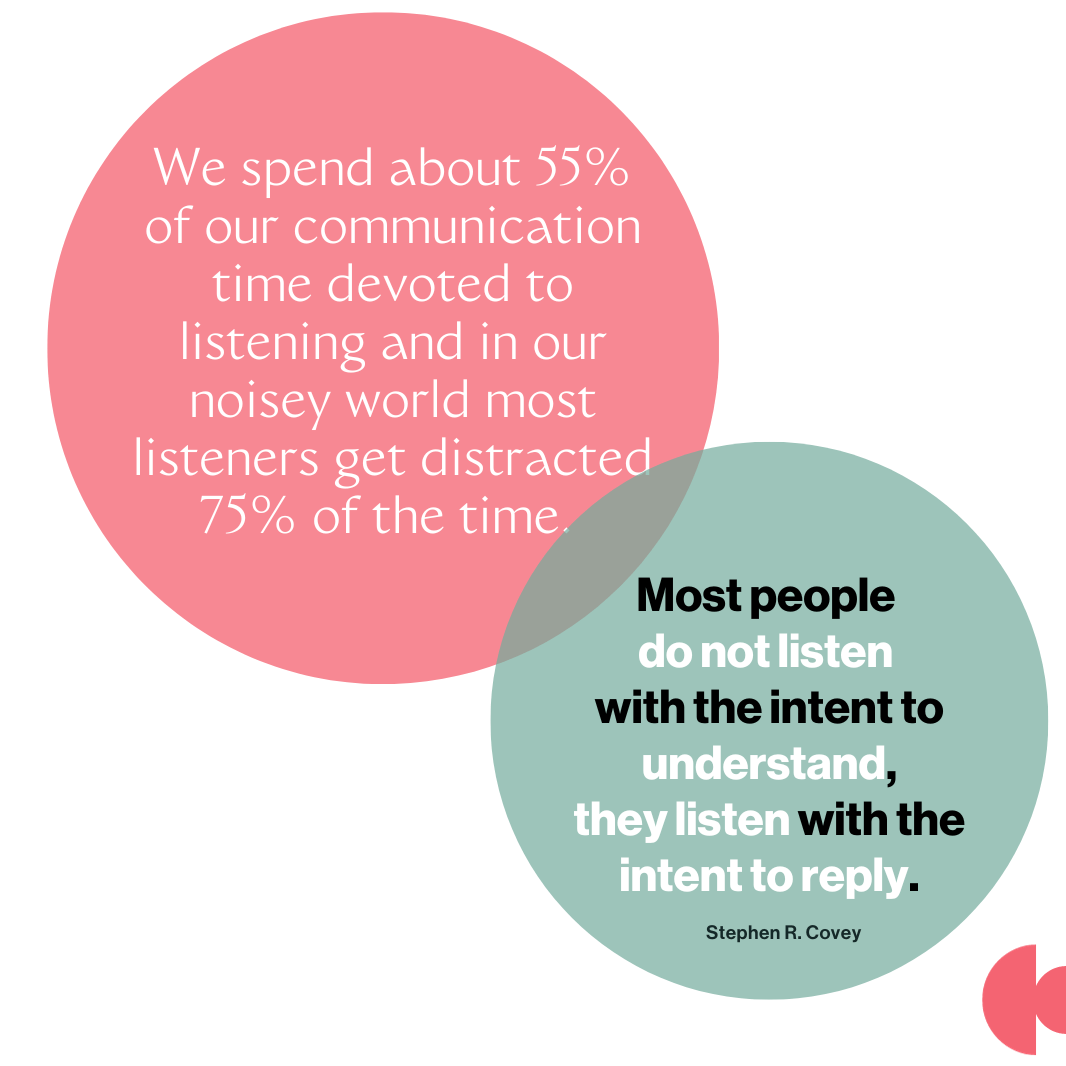
We all know that one person who’s always waiting for their turn to speak rather than truly listening. Don’t be that person. Active listening is a superpower in building trust.
Practice giving your full attention when team members speak. Reflect back what you’ve heard to ensure understanding. Ask thoughtful follow-up questions. A study in the Journal of Trust Research found that listening behaviours significantly impact the development of trust in leader-follower relationships.
For a deep dive into this fundamental leadership skill read my article on 8 simple strategies of deep active listening for leaders, download my comprehensive guide or take my short course with some powerful videos on these skills.
5. Recognise and Appreciate: The Trust Accelerator
Last but certainly not least, make recognition a habit. Appreciation is really like water for the garden of trust – it helps it grow and flourish.
Be specific in your praise. Instead of a generic “good job,” try “I was impressed by how you handled that client’s concerns in the meeting. Your patience and clear communication really turned the situation around.” Research by Gallup shows that employees who receive regular recognition are more likely to trust their colleagues and leaders.
It’s important to remember that building trust is not a one-time event but an ongoing process. It requires consistent effort and attention. But the payoff – a high-performing, engaged, and loyal team – is well worth the investment.
Level Up Your Trust Building Skills
It’s important to remember that building trust is not a one-time event but an ongoing process. It requires consistent effort and attention. But the payoff – a high-performing, engaged, and loyal team – is well worth the investment.
For some more tactical ideas and exercises to continue to build trust my Team Trust Foundation On Demand Course gives you tactical tools and exercises to continue to invest in this essential characteristic of high-performance teams

In our next article in this 2 part series, we’ll explore how this foundation of trust sets the stage for effective delegation, allowing you to increase your impact and empower your team.
The Art of Delegation: Empowering Your Team and Elevating Your Leadership