Most leaders I work with don’t struggle because they lack ambition, capability or care. They struggle because they’re stuck in what I call Manager Mode (also seen as directive mode) which is a state of constant reactivity, relentless problem-solving, and never-ending approval cycles.
It feels productive. Even essential. But it’s a trap.
And if left unchecked, it erodes your capacity to think strategically, lead intentionally, and grow the very people who need to step up.
The shift from Manager Mode to Leader Mode isn’t about a promotion or title. It’s about reimagining how you spend your time, how you relate to your team, and how you define your value.
At the heart of this shift? Coaching Conversations.
Coaching conversations are not just a “nice to have”, they are the catalyst that moves you from doing to developing, from directing to empowering, and from managing the day-to-day to leading the future.
Let’s explore what this transition really looks like, why it matters, and how coaching accelerates your leadership impact.
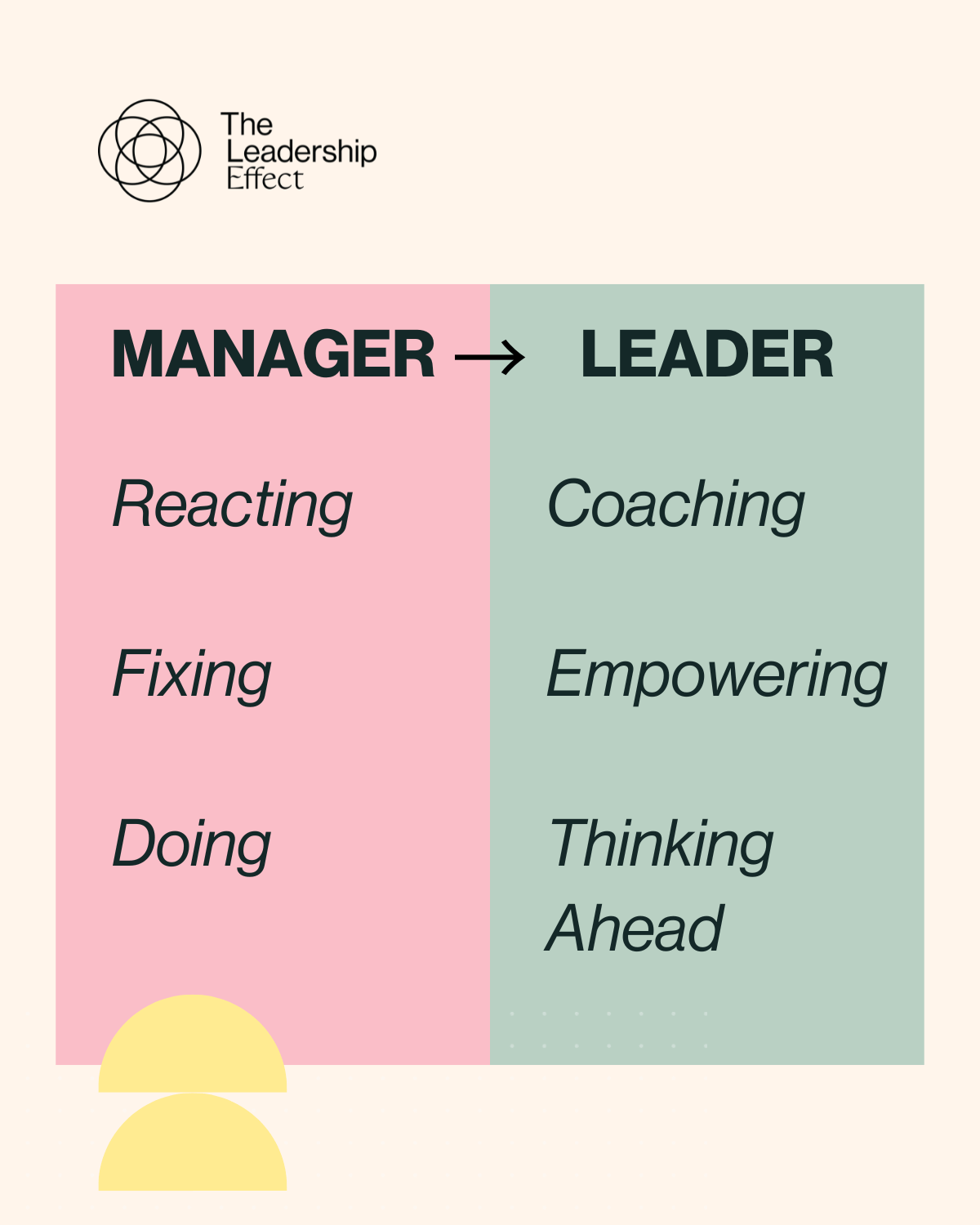
What Is Manager Mode?
Manager Mode is a pattern of behaviour that’s common, comfortable, and quietly corrosive. It looks like this:
- Constantly solving team problems
- Approving every decision
- Providing answers rather than developing others’ thinking
- Being in back-to-back meetings without time to reflect
- Prioritising output and activity over capability and clarity
Many mid- to senior-level leaders have been rewarded for being excellent problem-solvers. But what got you here — speed, responsiveness, technical expertise — is not what will take your team to the next level.
In Manager Mode, your team is dependent. Progress is fragile. And you become the bottleneck.
The result?
You’re overextended.
Your team is underdeveloped.
And strategy gets squeezed into the margins.
What Is Leader Mode?
Leader Mode is different. It’s defined not by control, but by clarity. Not by oversight, but by ownership. It looks like this:
- Creating space for strategic thinking and reflection
- Asking better questions instead of giving quick answers
- Developing the capability of your team
- Delegating outcomes, not tasks
- Building alignment around priorities, behaviours and values
Leader Mode isn’t about doing more. It’s about doing things differently.
Leaders in this mode act as multipliers of thinking and performance. They focus on the long-term health of the team, not just the short-term delivery of work.
The distinction was famously captured in Liz Wiseman’s research on multipliers versus diminishers, where she found that leaders who coach and stretch others get significantly more capability, creativity, and ownership from their people (Wiseman, 2010).
The Cost of Staying in Manager Mode
Remaining in Manager Mode may feel noble. You’re busy, involved, making things happen. But it comes at a high cost:
1. Strategic Blindness
You’re so deep in the weeds that you miss bigger patterns, opportunities or emerging risks. As McKinsey has reported, many executives spend less than 10% of their time on strategy. Yet those who make time for it see stronger organisational performance (McKinsey & Company, 2021).
2. Team Dependency
When you’re the go-to for every issue, your team learns to escalate, not to think. This reinforces passivity and burns you out.
3. Missed Development
Coaching moments get lost in the urgency of execution. And when development is reactive, growth becomes uneven and unsustainable.
4. Cultural Inconsistency
Without space to reflect on how you lead and model behaviours, you unintentionally reinforce the very culture you want to shift.
Coaching: The Catalyst for Change
If the goal is to move from Manager to Leader, coaching is the bridge. Not coaching in the formal, sit-down sense (though that has value), but integrated, everyday coaching conversations that spark ownership and build capability.
Why coaching?
- It shifts the mental model from “I need to fix this” to “They can figure this out.”
- It promotes deeper thinking and accountability
- It builds trust and psychological safety
- It frees up your time for strategic leadership
As the NeuroLeadership Institute explains, coaching activates the brain’s insight pathways, helping people make connections and generate their own solutions, which are more likely to stick (Rock, 2009).
The act of asking the right question at the right time can turn a stuck moment into a breakthrough.
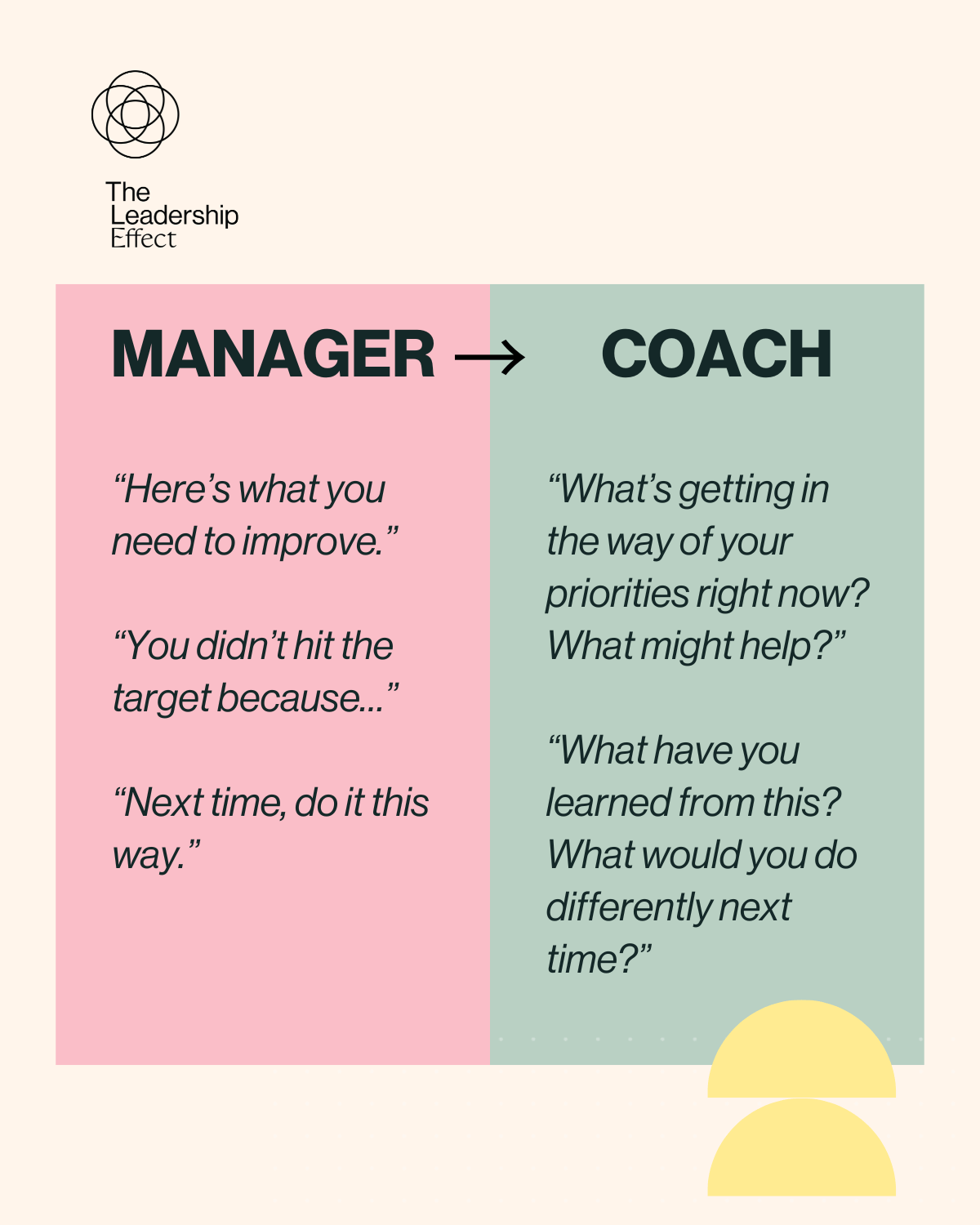
From Directing to Developing: What the Shift Looks Like
Let’s look at a few practical comparisons that demonstrate this transition in action:
| Manager Mode | Leader Mode (Using Coaching) |
| “Just do it this way.” | “What have you tried so far? What do you think could work?” |
| “Leave it with me, I’ll fix it.” | “What outcome are we trying to achieve here?” |
| “Why didn’t you hit the target?” | “What got in the way, and what would you do differently next time?” |
| “Let’s talk again at performance review time.” | “What are you learning right now? Where do you want to grow?” |
| “I need to make sure it’s done right.” | “What support do you need from me to lead this well?” |
These aren’t soft skills — they’re strategic tools. Coaching conversations are how culture is built, performance is elevated, and alignment is reinforced.
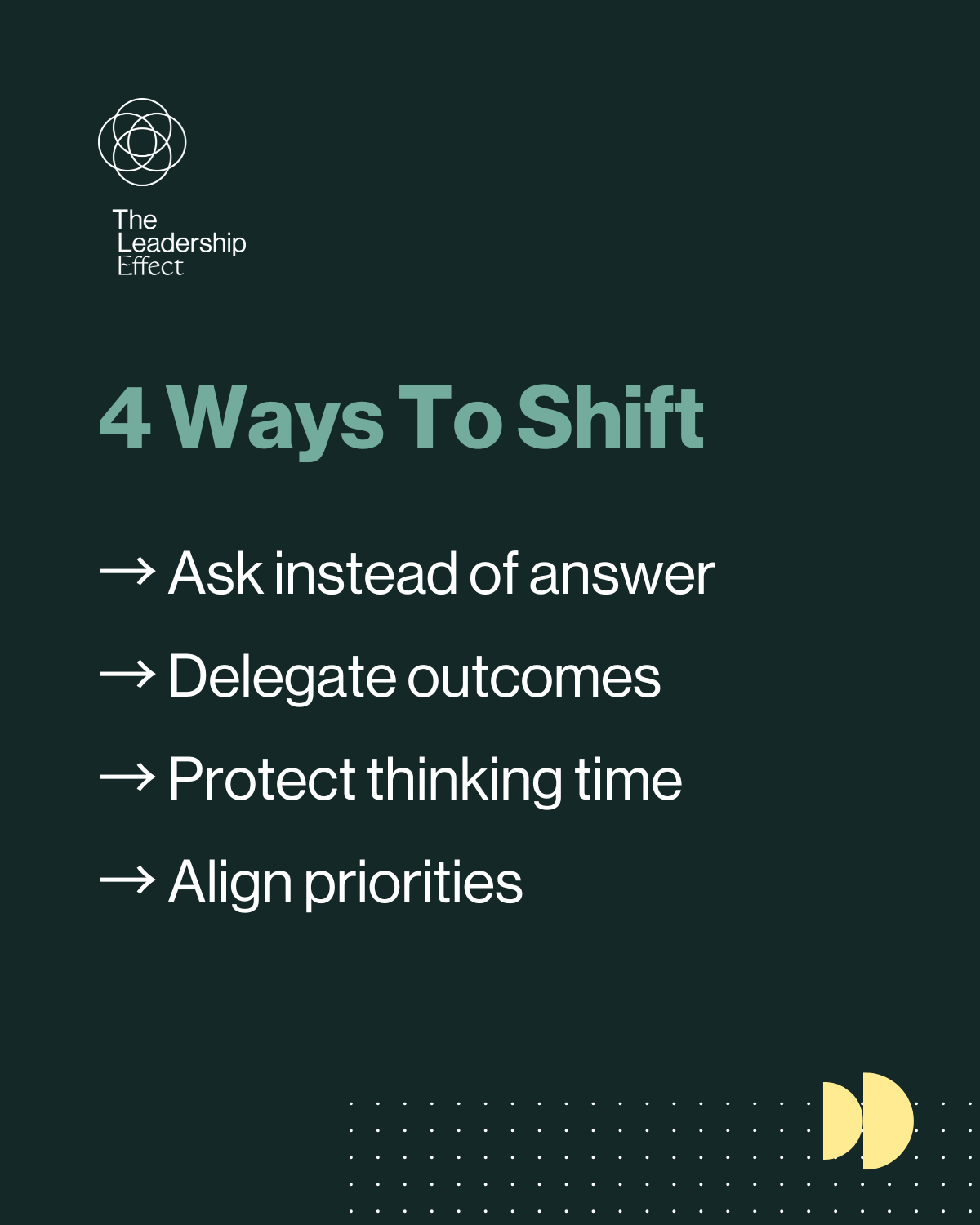
How to Start the Shift: Three Coaching Moves
If you’re ready to shift out of Manager Mode but unsure where to begin, start with these three simple but high-leverage moves:
1. Coach Instead of Fix
When someone brings you a problem, resist the urge to jump in with a solution. Instead, pause and ask:
- What’s the real challenge here?
- What options have you considered?
- What’s your recommendation?
You may be surprised by how much they already know — and how ready they are to own the next step.
2. Delegate Outcomes, Not Just Tasks
Task-based delegation creates checklists. Outcome-based delegation builds leadership.
Try shifting from:
“Can you write the client summary by Friday?”
To:
“We need a summary that helps the client feel confident and aligned. Can you lead the approach?”
This builds ownership and strategic thinking, two critical leadership muscles for your team.
3. Build Reflection into Your Routine
Reflection isn’t a luxury. It’s a leadership discipline.
Schedule weekly time to reflect on:
- How am I spending my time — am I stuck in the weeds?
- What conversations am I having — are they directive or developmental?
- Where might I be creating dependency without realising it?
A study in Harvard Business Review found that employees who engage in regular reflection perform 23% better than those who don’t (Di Stefano et al., 2014). The same applies to leaders.
Common Resistance and How to Overcome It
Shifting into Leader Mode can feel risky at first. Common concerns I hear from clients include:
- “It’s quicker if I just do it.”
In the short term, yes. In the long term, it slows everyone down. Time spent coaching now saves time later. - “What if they get it wrong?”
They might. But those are learning moments. Your role is to support the learning, not eliminate the risk entirely. - “I don’t have time for long conversations.”
Coaching doesn’t need to take hours. A five-minute, well-placed question can create far more traction than a 30-minute download.
Coaching isn’t about becoming less involved. It’s about becoming involved differently.
The Payoff of Leader Mode
When leaders make the shift, three things happen:
- Strategic headspace increases
You have time to plan, prioritise, and lead forward – not just keep the wheels turning. - Team capability lifts
People start thinking, owning, and solving more. You’re no longer the bottleneck. - Culture strengthens
Coaching signals trust. Trust builds psychological safety. And safety unlocks performance, creativity and accountability.
This is what high-performing, values-aligned teams are built on. Not just plans, but conversations. Not just direction, but development.

Start Small, Lead Large
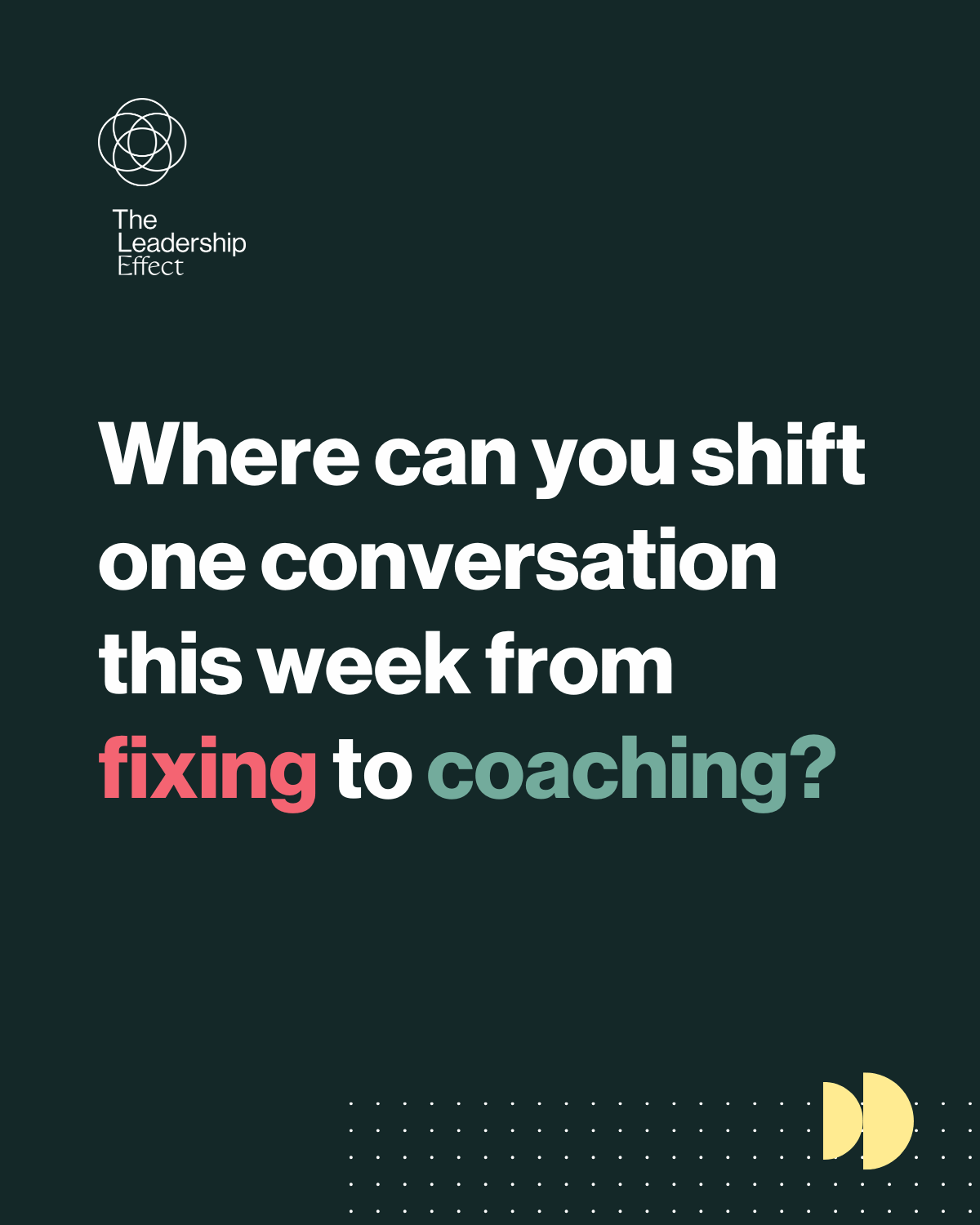
You don’t need to overhaul your leadership style overnight. Start with one conversation this week where you choose to coach instead of fix.
One question. One moment. That’s all it takes to begin.
The difference between Manager Mode and Leader Mode isn’t found in your title. It’s found in your intention, your impact, and your ability to develop the thinking of others.
If you want to grow your strategic leadership presence and free yourself from the weeds, this is the shift that will create it.
And coaching is how you get there.
Want support to make this shift?
This is the work I do every day with senior leaders and leadership teams through executive coaching and tailored programs. Book a discovery call to explore how we can work together to embed coaching skills into your leadership approach – or your management team.
References:
- Wiseman, L. (2010). Multipliers: How the Best Leaders Make Everyone Smarter. Harper Business.
- McKinsey & Company (2021). How to Make Time for Strategy
- Rock, D. (2009). Your Brain at Work. Harper Business.
- Di Stefano, G., Gino, F., Pisano, G., Staats, B. (2014). Learning by Thinking: Overcoming the Bias for Action through Reflection. Harvard Business School.